Skip to content
No results
  • About Dubbing AI
  • Contact
  • Editorial Policy
  • Privacy Policy
Dubbing AI
Dubbing AI
  • AI Dubbing

How Netflix AI Dubbing Works Inside the Pipeline
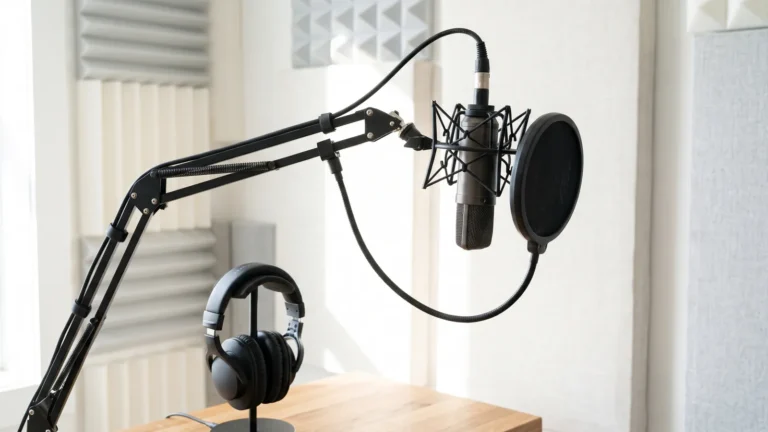
Condenser microphone on a boom arm with shock mount and pop filter, headphones on a stand in a bright room

Netflix AI dubbing is mostly pipeline automation, not finished AI voice tracks: speech recognition, source simplification, machine translation and synthetic speech assist human localization teams, with dub-quality review and human talent still deciding what ships. Mic, pop filter and headphones…
  • Dubbing AI Editorial Team
  • October 25, 2026
  • AI Dubbing

What Is Zero-Shot Voice Cloning and How It Works

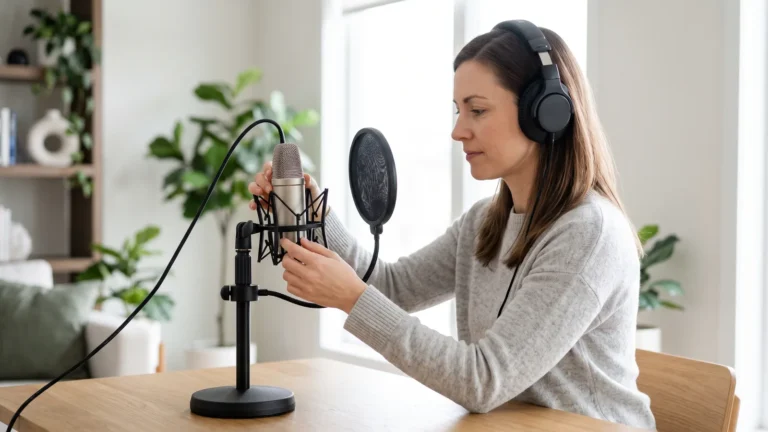
Woman wearing headphones adjusting a condenser microphone in a shock mount with pop filter on a desk stand

Zero-shot voice cloning copies a voice the model never trained on: your short clip is encoded as a voice prompt, a codec language model predicts speech tokens from your script, and a decoder rebuilds the waveform. Condenser mic, shock mount…

  • Dubbing AI Editorial Team
  • October 23, 2026
  • AI Dubbing

Best Free Local AI Text to Speech Models in 2026

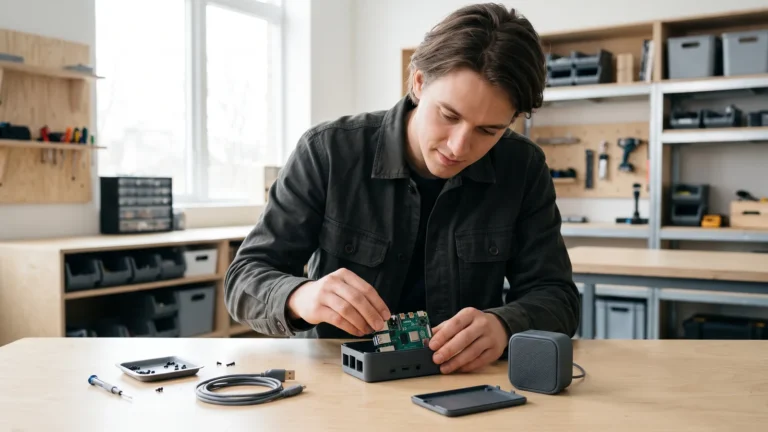
Man at a bright workbench fitting a small circuit board into a case, with a speaker, USB cable and screwdriver nearby

The strongest free local ai text to speech options are Kokoro-82M, Piper, Coqui XTTS-v2, Chatterbox, eSpeak NG and MeloTTS; Kokoro and Piper run on CPU-class hardware, while XTTS-v2 and Chatterbox want a GPU. A single-board computer being fitted into its…

  • Dubbing AI Editorial Team
  • October 20, 2026
  • AI Dubbing

Why Does Dubbing AI Sound So Bad? Causes and Fixes

Voice-over dubbing booth with microphone and headphones, illustrating why dubbing AI sounds so bad versus human dubs

AI dubbing sounds robotic for three reasons: translated lines don’t fit the original timing, synthetic prosody flattens emphasis and pauses, and audio drifts from lip movement. Fix it with length-aware translation, per-segment voice edits, and a visual sync pass. In…

  • Dubbing AI Editorial Team
  • October 11, 2026
  • AI Dubbing

How Accurate Is an AI Voice Detector? What Benchmarks Show

Headphones and small audio interface on a cluttered dubbing QA desk

An AI voice detector estimates whether speech was machine-generated. On the in-the-wild Deepfake-Eval-2024 benchmark, the best commercial audio detector hit 0.89 accuracy and 0.93 AUC, while open-source models lost an average of 48% of their AUC. Studio corner: headphones, an…

  • Dubbing AI Editorial Team
  • October 10, 2026
  • AI Dubbing

ASL Video Translation: How It Works, Where Avatars Fail

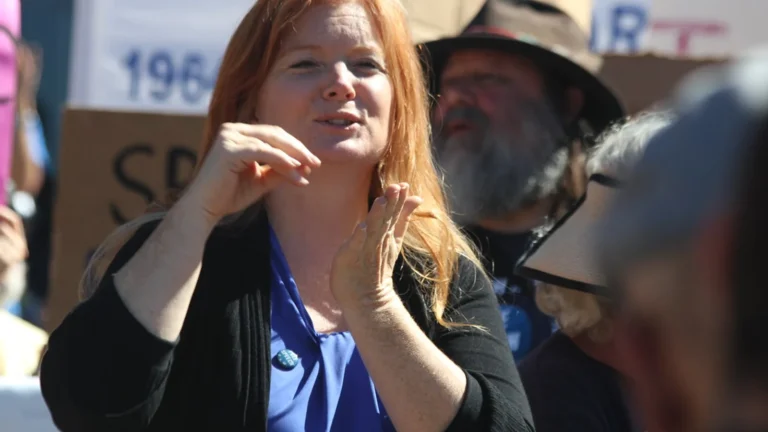
ASL interpreter signing on camera, the core of ASL video translation, framed from mid-torso up

ASL video translation converts a source script into American Sign Language grammar, then renders it on video through a filmed interpreter or an animated avatar. Avatars help with short, repeatable content; they struggle with grammar, facial markers and community trust.…

  • Dubbing AI Editorial Team
  • October 9, 2026
  • AI Dubbing

Best Video Translation Services Compared on Cost and Speed

Home dubbing booth with condenser microphone, pop filter, headphones and acoustic foam panels

Human subtitle translation at Rev runs $6.99–$15.99 per minute with a 48-hour commitment; AI tools meter per minute in credits and return drafts fast; hybrid post-editing under ISO 18587 is described here qualitatively, since no vendor in this comparison publishes…

  • Dubbing AI Editorial Team
  • October 8, 2026
  • AI Dubbing

Script Voice Over Example for a 60-Second Explainer

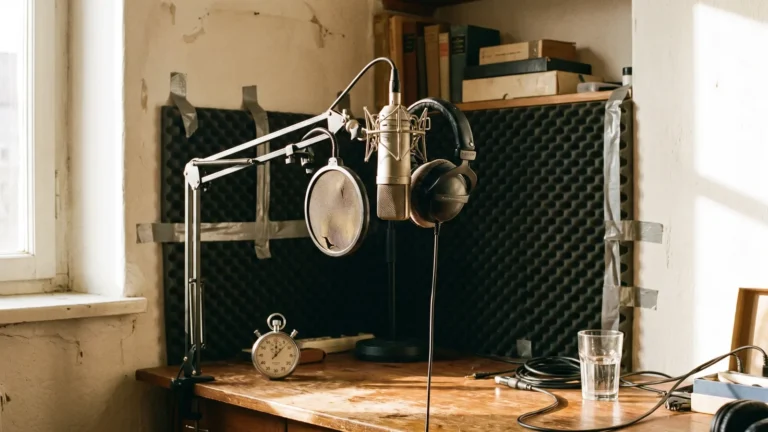
Home recording corner with condenser microphone, pop filter, headphones and a stopwatch on a desk.

A well-timed 60-second voice-over script runs roughly 130–150 spoken words, split into four timecoded beats, written in two columns — visuals left, narration right — with pause, emphasis and pronunciation marks baked in. Mic in a shock mount with pop…

  • Dubbing AI Editorial Team
  • October 7, 2026
  • AI Dubbing

How to Do a Voice Over on PowerPoint, Step by Step

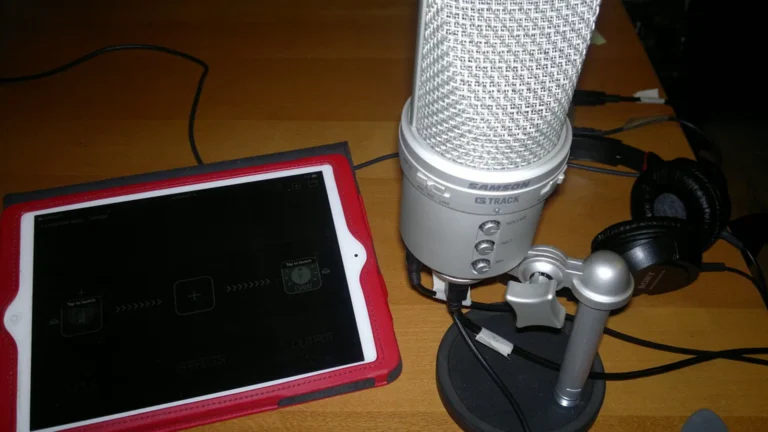
USB condenser microphone and closed-back headphones on a desk, the setup used to record a voice over on PowerPoint

Write a script into each slide’s notes, record it with PowerPoint’s Record tab or drop in AI-generated audio per slide, check timings in Slide Sorter, then use File > Export > Create a Video to save an MP4. A Samson…

  • Dubbing AI Editorial Team
  • October 6, 2026
  • AI Dubbing

How Video Game Translation Services Handle Multi-Market Dubs

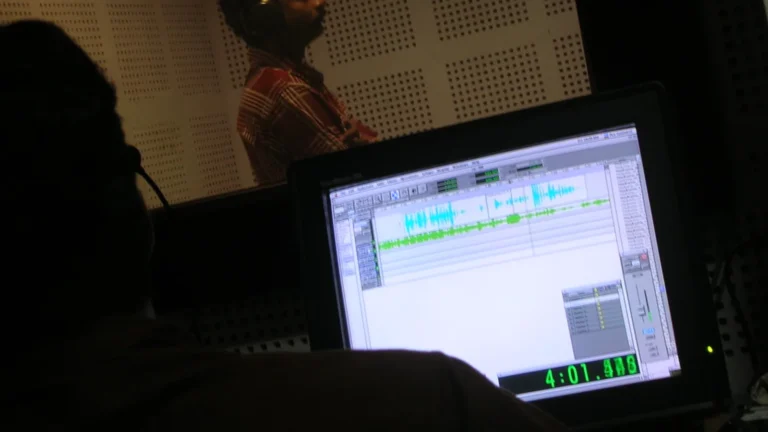
Vocal recording booth with condenser microphone and headphones used by video game translation services for dubs

Studios split markets by tier: every shipping language gets translated UI and subtitles, while only the top revenue markets get full dubs. Work runs through one export, a locked glossary, post-edited MT, then recording or synthesis, LQA and platform tagging.…

  • Dubbing AI Editorial Team
  • October 5, 2026
1 2
Next

Copyright © 2026 - Dubbing AI