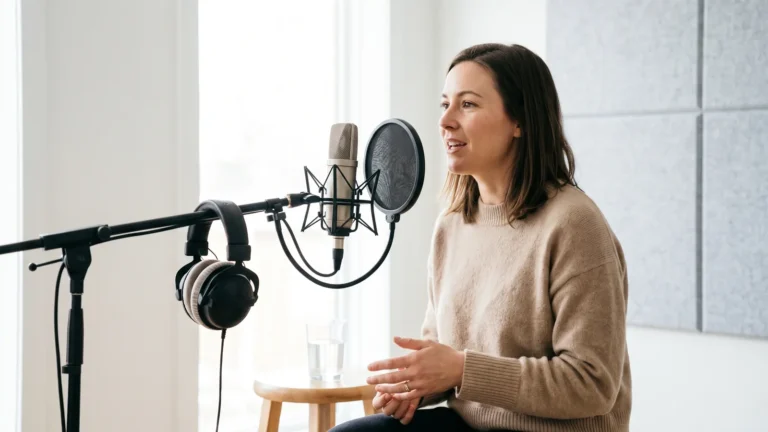
Tools that AI dub anime can produce a usable rough track, not a finished performance — acting range, honorifics and lip flaps still fail, so fans reject unsupervised output without human adapters, directors and QC.
What is confirmed, what is only reported, and what platforms have never disclosed
Three fact levels sit behind every argument about AI anime dubs, and mixing them is how bad licensing decisions get made. Sort them before you sign anything.
Confirmed
- Amazon’s Prime Video AI dubbing pilot launched in March 2025 with AI-aided English and Latin American Spanish dubs on 12 licensed movies and series, according to About Amazon.
- Prime Video’s stated limit for that pilot was that AI dubbing is applied only to titles that have no existing dub, according to Raf Soltanovich, VP of Technology at Prime Video and Amazon MGM Studios, as reported by Slator.
Reported
- The National Association of Voice Actors (NAVA) publicly called Amazon’s AI anime dubs "AI slop" and demanded consent, control over AI replicas and compensation, according to Anime News Network.
Never disclosed
- Which speech models or vendors produced the AI audio on specific anime titles.
- How many hours of human review, if any, each episode received before release.
- Whether the Japanese rights holders and the original cast approved the synthetic English performance.
- How many viewers actually selected the AI track instead of subtitles.
Treat that last group as unknown rather than as evidence for either side of the argument. Vendors who quote "industry results" for AI anime dubs are quoting numbers nobody has published.
Why anime localization demand outruns human dub capacity
Simulcast schedules set the pace. A seasonal slate drops within days of Japanese broadcast, and English, Spanish, Portuguese, French and German audiences all want audio on day one, while back catalogue titles from the 1990s and 2000s sit undubbed forever.
Human dubbing does not scale that way. Casting, script adaptation, booth time with a director, retakes, mix and QA all run in sequence, and the talent pool of experienced anime dub actors in any one language is small enough that the same names recur across dozens of shows.
Fans were promised a fix. The pitch from platforms was more titles dubbed, in more languages, sooner — especially for shows that would never earn a traditional dub budget. That promise is the reason to test AI at all, and it is a real reason, not a marketing line.
The honest middle ground is that subtitles already serve most of this audience, and the decision of when subtitles beat a dub for a given title should come before any synthesis budget. AI audio is an addition to that stack, not a replacement for it.
Where AI dubbing breaks anime: performance, honorifics and lip flaps
Anime is a performance-first medium, and that is exactly where machine output thins out. Engadget reported that Amazon quietly added AI-generated English dubs labelled "AI beta" to Banana Fish, No Game No Life and Vinland Saga, then removed them after widespread ridicule from viewers and the industry.
The specific failure modes repeat across tools:
- Emotional range. Screams, sobbing, strained battle breath and comic timing collapse into a level reading voice.
- Honorifics and register. "-san", "-senpai", name order and the switch from formal to blunt speech carry plot meaning; a literal machine pass flattens or deletes them.
- Lip flaps. Japanese animation is drawn to Japanese dialogue timing; English lines must be rewritten to fit fixed mouth movements, not just translated.
- Consistency. A character voice must hold across a 24-episode run, including whispers, flashbacks and age changes.
- Songs and walla. Insert songs, chants and crowd beds are rarely handled at all.
If raw output sounds rushed and dry to you, the common causes behind flat AI dub audio are usually pacing, compression and a missing adaptation step rather than the voice model. Japanese-language tracks have their own trap: a pitch accent guide for Japanese synthetic speech explains why a correct-looking reading can still sound wrong to native listeners.
The people being replaced also feel this first. Dubbing actors were slightly more likely than other voice actors to say they had lost work to AI, at 76.2% versus 73.6%, according to Slator’s coverage of the survey.
The second failure point: trust, consent and credit
Quality is only half the backlash. The other half is who agreed to what.
Crunchyroll told Engadget that AI-generated subtitles on its service came from a third-party vendor and breached its vendor agreement, which confirms AI output was contractually barred in that workflow. A contract clause only works if someone audits deliverables against it.
In Japan, 26 well-known anime voice actors, including Ryūsei Nakao, Kōichi Yamadera and Yūki Kaji, formed the "No More Unauthorized Generative AI" awareness project against unapproved voice cloning, SoraNews24 reported. That is the original cast, not a distant union, saying no to cloning without permission.
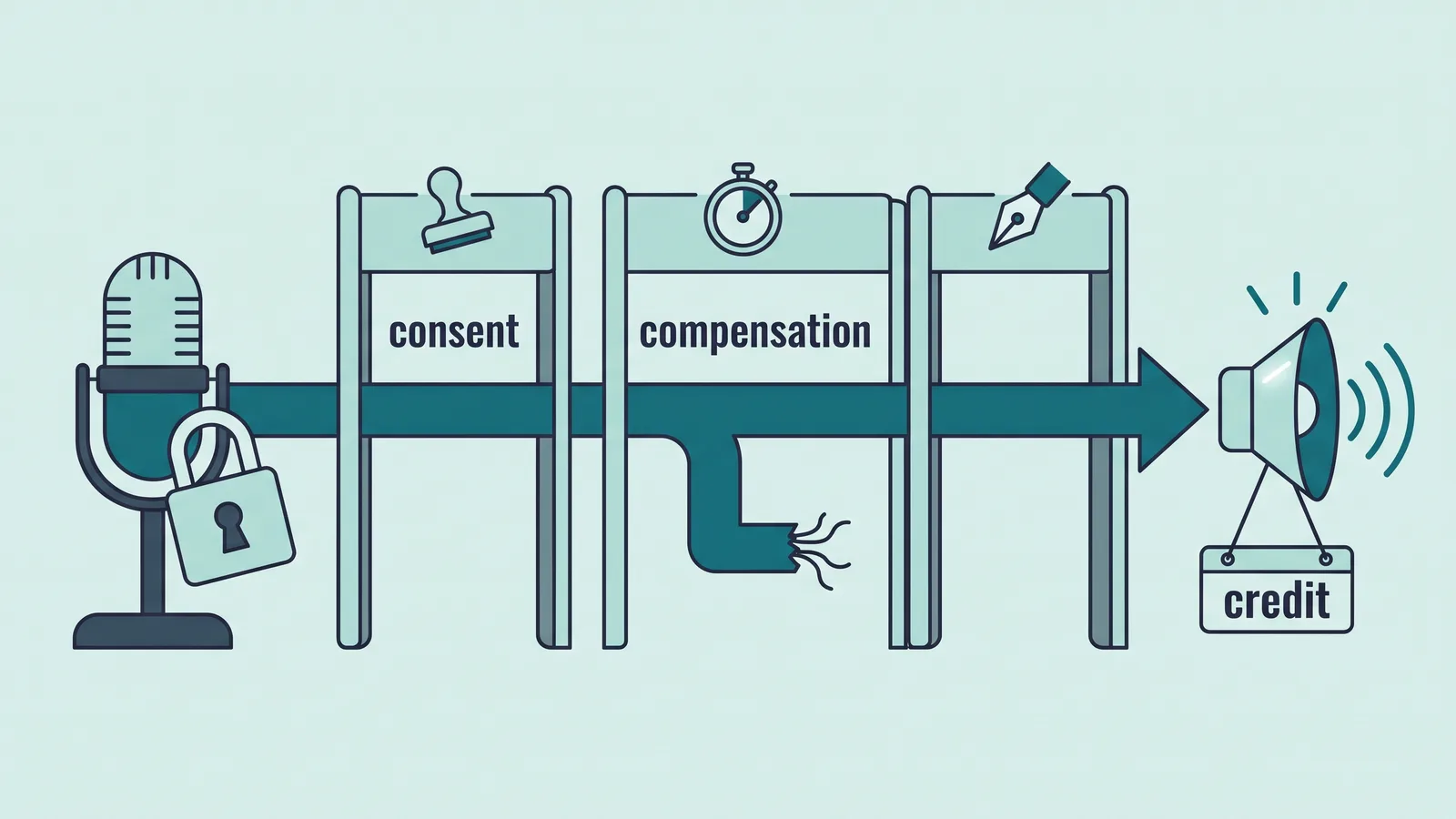
NAVA’s demand on the Amazon dubs was narrower and sharper: consent, control over AI replicas and compensation, according to Anime News Network. Credit matters too — fans check dub casts, and an unlisted or synthetic performer gets spotted within hours of release.
Build your paperwork around three questions. Who owns the voice identity, what uses are licensed and for how long, and who signs off before the track goes live? Rules on voice and likeness differ by jurisdiction — Japan, the United States and the EU each treat performer rights and publicity differently, and US state law varies — so this is general information, not legal advice.
A hybrid pipeline where AI drafts and humans own the final take
The workable shape is narrow: machine speed on the draft, human authority on everything that ships. Voice talent is not uniformly opposed — in an independent survey of 747 working voice actors by Voice Crafters, 77.7% said yes or maybe to licensing their voice for AI use if consent, usage limits and ongoing payment were guaranteed.
| Stage | AI can draft | A human must own |
|---|---|---|
| Script adaptation | Literal translation pass | Honorifics, register, jokes, lip-flap rewrite |
| Voice identity | Candidate voices from a licensed bank | Casting approval and consent paperwork |
| Performance | Neutral read of each line | Direction, retakes, emotional beats |
| Timing | First alignment to flaps | Final sync and scene rhythm |
| Release | Draft mix | QC, labelling, credits, takedown authority |
Two rules keep this honest. Never apply synthesis to a character whose actor has not signed for it, and label the track in the player so viewers choose it instead of discovering it.
If you want a picture of how a large streamer structures the human checkpoints around automation, the inside view of Netflix’s dubbing pipeline is a useful comparison for anime workflows.
Results expected by design: cost, turnaround and the quality ceiling
Example: a licensor holds an older 13-episode catalogue series with Japanese audio and English subtitles only, and no English dub has ever existed. The team runs an AI draft, then books a human director and adapter for passes on every episode.
- Before: no English audio track at all; viewers who cannot read fast subtitles are excluded; the title earns no dub budget under traditional casting costs.
- After (expected by design): a labelled English AI-assisted track exists, lead lines are human-approved, and the machine pass is the cheapest line item in the budget.
As of October 2026, ElevenLabs’ official API pricing lists automatic dubbing from $0.33 per source minute with a watermark, rising to $0.50 without a watermark or via Dubbing Studio. Those figures cover the synthesis pass only — adaptation, direction, QC and mix stay on the human side of the ledger, and they dominate the real cost.
Set the quality ceiling in writing before anyone hears a demo. Expect a competent neutral read, acceptable sync on dialogue-heavy scenes, and failure on screams, songs, heavy accents and comedic timing. Plan a human re-record for leads and for any scene the director flags, and label results as expected by design until a real release proves otherwise.
Where AI dubbing actually fits today — and where to keep humans
The fit is narrow and real. Deep catalogue titles with no dub and no dub budget, language previews used to test demand in a new territory, accessibility tracks for viewers who struggle with subtitle speed, and internal screeners or pitch reels that never reach the public.
Keep humans on flagship simulcasts, leads in any title with an existing fandom, comedy, songs, and anything a returning cast has already voiced. Recasting a beloved character with a synthetic voice is the fastest way to turn a release into a news cycle.
Adjacent content is a softer place to start. Marketing explainers, convention loops, store pages and training material around a release can be voiced synthetically without touching a character — platforms built for that job, such as AI Studios, offer more than 1,000 AI voices and text-to-speech in 150+ languages and accents on paid plans.
One caution on sourcing: a vendor’s cloned-voice library is only as clean as its consent records, and the Crunchyroll case shows that subcontractors are where policies quietly break. Ask for the chain of permissions in writing, per voice.
Related real cases
Amazon Prime Video. The AI dubbing pilot launched in March 2025 on 12 licensed movies and series in English and Latin American Spanish, according to About Amazon — a controlled, disclosed test with a stated scope.
Amazon’s anime "AI beta" tracks. Engadget reported that the AI-generated English dubs added to Banana Fish, No Game No Life and Vinland Saga were pulled after widespread ridicule, which is the clearest public signal of where fan tolerance ends.
Crunchyroll. The company told Engadget that AI-generated subtitles came from a third-party vendor and breached its vendor agreement — a reminder that the risk often sits one contract away from you.
"No More Unauthorized Generative AI." The coalition of 26 anime voice actors reported by SoraNews24 is the group most likely to decide whether your synthetic cast is seen as licensed work or theft.
Frequently asked questions
Can an AI dub of an anime pass as a finished simulcast release?
Not on current evidence. Engadget reported that Amazon’s AI-generated English dubs on Banana Fish, No Game No Life and Vinland Saga were removed after widespread ridicule, which is what happens when an unsupervised machine pass meets an audience that knows the source performances line by line.
Does Prime Video apply AI dubbing to titles that already have a human dub?
No. Raf Soltanovich, VP of Technology at Prime Video and Amazon MGM Studios, stated that the pilot applies AI dubbing only to titles with no existing dub, as reported by Slator — so the stated scope is undubbed catalogue, not replacement of released dubs.
What does the machine pass of an AI anime dub cost?
Published list pricing gives you a floor, not a project budget. As of October 2026, ElevenLabs’ official API pricing lists automatic dubbing from $0.33 per source minute with a watermark and $0.50 without one; adaptation, direction, retakes, mix and QC are separate human costs.
Are voice actors opposed to every use of AI voice in dubbing?
Opposition centers on consent, not technology. In an independent survey of 747 working voice actors by Voice Crafters, 77.7% said yes or maybe to licensing their voice for AI use when consent, usage limits and ongoing payment were guaranteed.
How should honorifics and Japanese speech levels be handled in an AI-assisted dub?
Hand them to a human adapter before synthesis, not after. Suffixes like "-san" and "-senpai", name order and shifts between polite and blunt speech carry plot information, and the rewritten English line also has to land inside the existing lip flaps.
Sources
- Prime Video begins an AI dubbing pilot program on licensed movies and series — About Amazon
- Amazon Prime Video Launches AI Dubbing Pilot — Slator
- Amazon halts AI anime dub ‘beta’ after widespread ridicule — Engadget
- Answerman – Addressing the Amazon AI Dubs Controversy — Anime News Network
- Crunchyroll blames third-party vendor for AI subtitle mess — Engadget
- 26 anime voice actors and actresses form group to speak out against unauthorized generative AI — SoraNews24
- Stolen at the Audition: The 2026 State of Voice Acting — Voice Crafters
- Voice Actors Report Losing Work to AI, Dubbing Hit on Pay — Slator
- ElevenLabs API Pricing: Plans for Creators & Businesses of All Sizes
This article was drafted with AI assistance and published by the Dubbing AI Editorial Team after its facts were checked against the sources listed above.